

In the aftermath of events such as the Sanson fire, the Elim canyoning disaster and the Abbey Caves tragedy, the children left behind are often disoriented and shattered. It falls upon schools to rebuild in the wake of disaster and the response and handling of children after traumatic events can determine the ripple impact on the community. Reporter Eva de Jong looks at what is done and what can be improved.
This year鈥檚 Sanson tragedy, in which three young children 鈥� August, Hugo and Goldie Field 鈥� died in a fatal house fire, left two empty desks at Mount Biggs School in Feilding.
In the days that followed, an anonymous guardian criticised the school鈥檚 management of the crisis to the Herald, saying parents had been 鈥渓eft to support these young children through this trauma鈥�.
Since then, the Ministry of Education has told the Weekend Herald a parent hui was held, with a traumatic incident team sent to the school and the Child Adolescent Mental Health Service engaged to respond to queries from parents about how to support their children.
The difficult question, however, and one that comes up often after painful tragedies, is whose job it is to address the grief of a community in mourning.

Murray Burton still remembers the horror of the first phone call from police on the evening of the tragedy. Photo / Dean Purcell
In University of Auckland research fellow Ying Wang鈥檚 eyes, schools throughout New Zealand are ill-prepared to address trauma because of the strain on school counsellors and lack of support for frontline mental health workers.
A study conducted this year by Wang involved speaking to 29 professionals, including psychologists, school counsellors, social workers and forensic doctors, who were working with young Asian people affected by sexual violence.
鈥淪ome people I interviewed were school counsellors and when they have a disclosure for sexual violence, for example, they don鈥檛 even know where to refer it to; and also many of them don鈥檛 have enough trauma-informed training,鈥� she says.
The response Wang heard repeatedly was: 鈥淚 don鈥檛 know how to deal with it.鈥�
In cases in New Zealand鈥檚 recent history, the Education Ministry has responded to a traumatic event at a school by sending in expert staff. Despite this extra help, for principals facing the aftermath of a tragedy, the weight of responsibility is enormous.
Principal Murray Burton knows this fact better than most. In 2008, he was left to grapple with the deaths of six of his students and a teacher after a canyoning trip on the Mangatepopo Stream in Tongariro National Park went tragically wrong.
A flash flood that rose quickly through the high walls of the canyon resulted in seven of the group of 10 drowning in the raging waters.
Burton still remembers the terror of the evening phone call from a police officer who told him, 鈥榓t this stage I can tell you that you鈥檝e definitely lost four, but you can鈥檛 tell anyone鈥�.
Protocol required the police officers at the scene to formally identify the bodies and travel to each household to deliver the news.
That night, many of the families had already arrived at Elim Christian College in Auckland and Burton was faced with the task of meeting anxious parents whose children he already knew were dead.
鈥淚 knew they didn鈥檛 need a principal who was ashen-faced or wouldn鈥檛 come out of the office, they needed a sense of empathy. They needed me to give them a hug and tell them we are trying to get to the bottom of this,鈥� Burton says.

University of Auckland research fellow Ying Wang believes New Zealand schools are ill-prepared to address trauma. Photo / Dean Purcell
When a young person dies or is hurt in a school setting, anger is also an emotion that can rise quickly to the surface for parents.
In the Abbey Caves tragedy in 2023, schoolboy Karnin Petera, 16, died in a swirling current that swept through the network of caves in Whang膩rei, while the rest of the students managed to escape.
At a sentencing in the Whang膩rei District Court, his parents expressed frustration at the school鈥檚 handling of the tragedy and the fact they had made repeated phone calls to the school expressing concern over heavy rainfall.
Following the event, Whang膩rei Boys鈥� High School was ordered to pay more than half a million dollars to the victims, including Petera鈥檚 family.

Andre Petera (left) and Alicia Toki with son Jordan and their beloved Karnin, known as Tino, who died in the Abbey Caves tragedy. Photo / Jodi Bryant
Burton said he observed during the years following the Mangatepopo canyoning tragedy the muted anger and many stages of grief the seven families of the victims went through 鈥� made harder by the drawn-out court process and follow-up investigations.
Choosing forgiveness was a hard road that required constant work every day, he said.
鈥淭hey鈥檒l never get over it, but they will walk through it.鈥�

Ying Wang has found using art and visual expression are effective ways to communicate or process trauma. Photo / Dean Purcell
鈥楴o fixed timeline鈥� for healing
Practising psychologist Sehar Moughal says it is often assumed that therapy support for trauma is needed immediately after an event; however, trauma processing can be delayed or happen months or even years later.
Moughal works with survivors of family and gendered violence and those with traumatic brain injuries (TBI).
鈥淧eople forget that it takes a while for a person to move away from the fight-or-flight response and it can take a long time for them to try to make sense of the traumatic experience,鈥� she says.
鈥淭here might be short-term funding or support for a group of people or a community immediately after a traumatic event. But, let鈥檚 say six months down the line, that鈥檚 when the psychology and therapy services really need to be in place as well.鈥�
Immediately after a traumatic event, the brain鈥檚 focus is on basic functioning for survival; people are not always ready for recall and reflection at that stage, she says.
鈥淗ealing is a process; there鈥檚 no fixed timeline after a traumatic event. Some people still grapple with it years later.鈥�
In the Cave Creek disaster in 1995, 13 Tai Poutini Polytechnic students and a DoC worker died after a poorly constructed viewing platform collapsed into a chasm.
Almost three decades on, a sibling of a victim in the tragedy spoke of the continuing grief and constant wondering about what might have been different had her brother survived.
Burton said in the immediate aftermath of the canyoning tragedy he was able to remain strangely calm, but it was an effort not to crawl into a hole and let the grief consume him.
Burton鈥檚 advice to other principals who found themselves facing enormous tragedy was to centre their thinking on those who were closest to the grief rather than worrying about the school鈥檚 reputation.
鈥淢y plea would be to read the room, know your community. Know yourself. Don鈥檛 get ahead of yourself, but be that sure, dependable person that the community needs when it鈥檚 been rocked and torn apart.鈥�
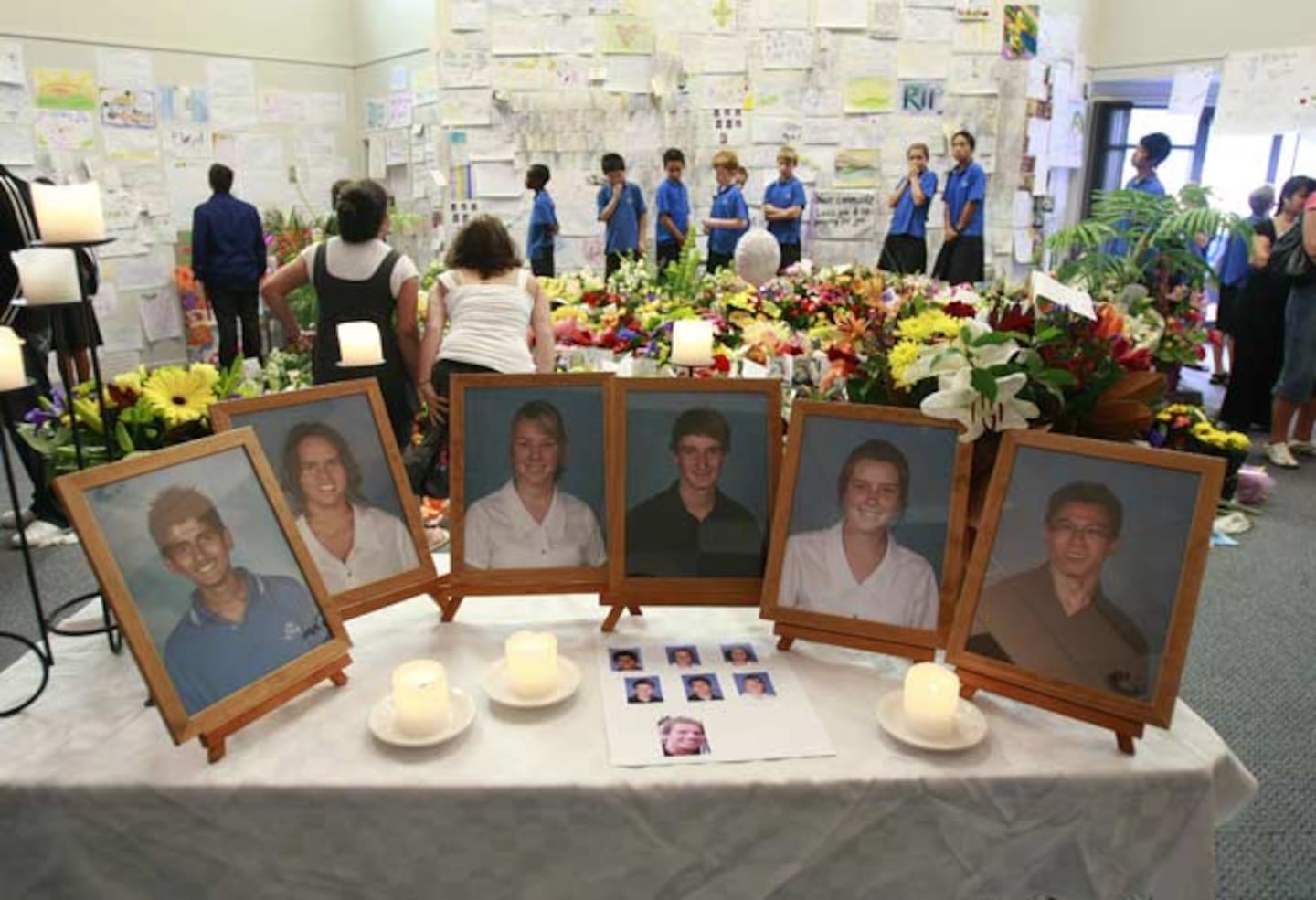
Photographs of the six Elim Christian College students killed on the Mangatepopo Stream displayed in the school chapel. Photo / Kenny Rodger
A consideration that weighs on Burton鈥檚 mind, who now works as a leadership consultant, is how social media would have changed the way the
This month鈥檚 terrorist mass shooting at Bondi Beach involved the quick dissemination of videos and images on social media in the minutes and hours after the attack.
That included AI-generated images used to spread false narratives about the event and identity of the shooters.
Burton believes that if the canyoning tragedy happened now, there would be videos popping up online from the kids that were at the camp and the story would have unfolded exponentially faster.
鈥淚 just shudder to think 鈥� it would have made the job a lot harder, I think.
鈥淧eople would have been forming conclusions, making judgments. I think that鈥檚 one thing now for all school leaders, you鈥檝e got to make the assumption that it will be out there before you know it. And therefore, you鈥檙e essentially running on the back foot.鈥�
The long wait times and shortage of professionals within the mental health system could contribute to difficulties in helping schools recover from traumatic events.
Wang says many of the professionals she spoke to felt powerless because they might be able to see a young person desperately in need of support only once a week or less, and it left professionals feeling lonely, overwhelmed and frustrated by the system.
鈥淧eople working in the schools have beautiful hearts and are really caring towards our young people, but they don鈥檛 have support. They are working in a really fragmented system,鈥� Wang says.
鈥淭hey need to look after all these students, many of them who have multi-layered challenges such as peer pressure or family conflict. The teachers, do they have enough training to work with that?鈥�
In one instance, Wang heard of a school counsellor whose reaction of shock to a young person鈥檚 disclosure of sexual violence silenced the victim and prevented them from speaking out again for some time.
Schools are also left to comfort families and inform students when young people die by suicide and this can give rise to feelings of guilt or weigh heavily on the entire school population if left unaddressed.
This month, Coroner Tania Tetitaha called for a single, co鈥憃rdinated care pathway that ensures continuity of support, after an inquest into a tragic cluster of youth suicides in Northland.
Coroner Tetitaha recommended Te Whatu Ora extend frontline mental health service Te Roopu Kimiora鈥檚 school liaison roles into secondary schools throughout Northland.
The coroner also noted the Ministry of Education should consider law reform to resolve the funding issue.
For Wang, when speaking with victims of sexual violence, using non-verbal tools such as art and visual expression are methods she found helps people effectively communicate their trauma.
Burton says school leaders need to be absolutely resolute in the belief they are there first and foremost for people 鈥� and not for the institution鈥檚 reputation.
鈥淲hatever the trauma is or whatever the event is that produces the trauma, this is part of an unfolding story for your organisation that will always be there.
鈥淵ou ignore it at your peril. Embrace it for the life of the community,鈥� he says.
Eva de Jong is a reporter covering general news for the New Zealand Herald, Weekend Herald and Herald on Sunday. She was previously a multimedia journalist for the Whanganui Chronicle covering health stories and general news.
Take your Radio, Podcasts and Music with you
Get the iHeart App
Get more of the radio, music and podcasts you love with the FREE iHeart app. Scan the QR code to download now.

Download from the app stores
Stream unlimited music, thousands of radio stations and podcasts all in one app. iHeart is easy to use and all FREE


