

The high-profile case of an alleged glassing inside a Westmere mansion was on track to finally be resolved this week after lingering in the Auckland District Court for nearly five years.
But after more than nine hours of deliberations stretching over two days, jurors tasked with deciding property developer Andrew Montgomerie鈥檚 fate informed Judge Paul Murray this afternoon that they were hopelessly deadlocked.
The panel was sent away with a thank you for their hard work. The case will be called again in two weeks, on track for an eventual retrial.
Montgomerie, 58, was charged in April 2021 with wounding with reckless disregard for the safety of others after he smashed a glass of vodka soda against a colleague鈥檚 neck following an exchange of insults at the lavish party, causing a section of the soiree to morph into a roped-off crime scene.
Over four days of witness testimony, jurors heard a number of conflicting accounts about the party in general and about the specific incident.
Confusion seemed to surround the purpose of the gathering - described at various times as a cocktail party, a 40th birthday or a surprise engagement - as well as what kind of glassware the defendant was holding and whether a platter of cocaine was circulated among guests.
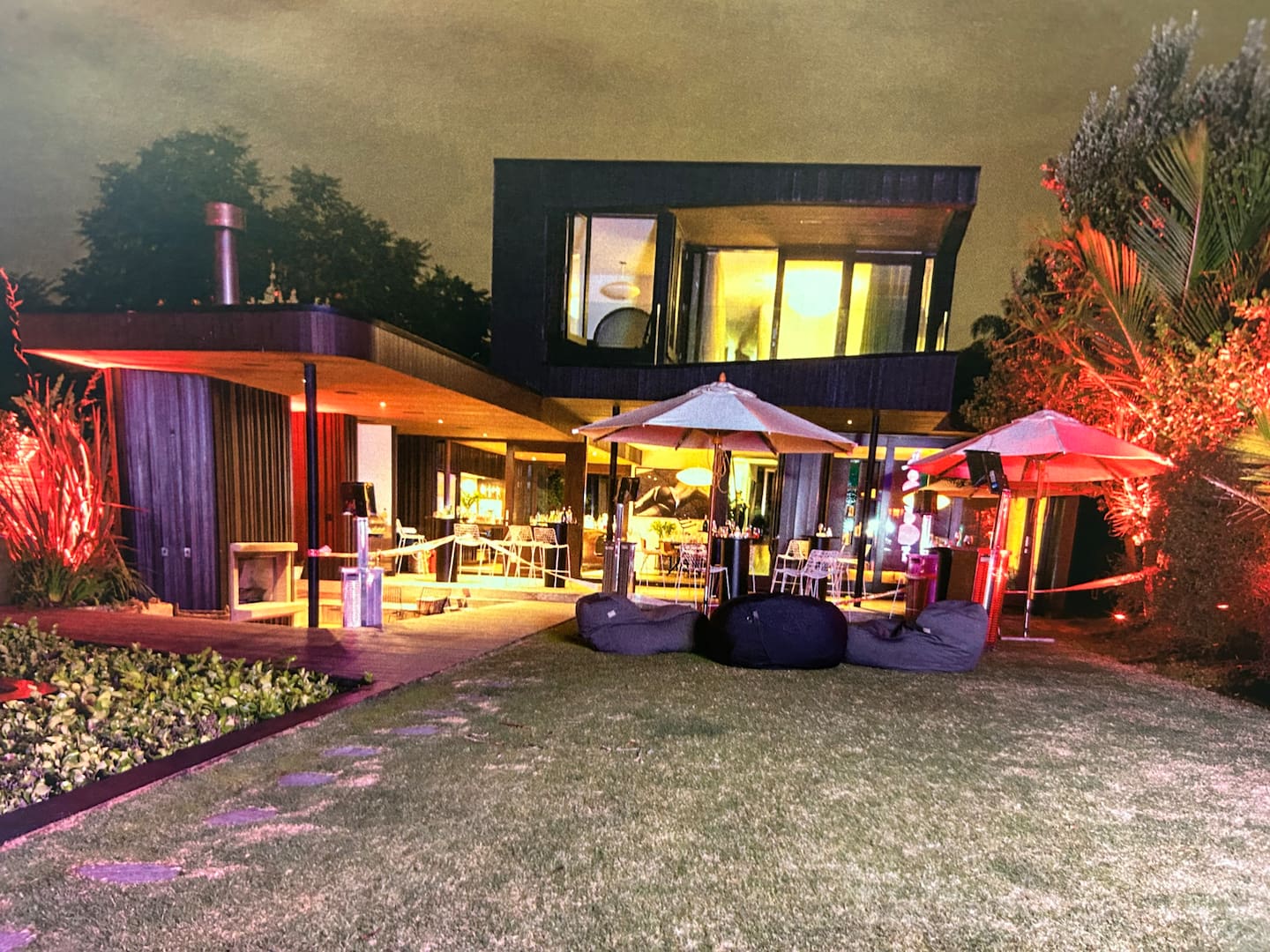
A cocktail party at a Westmere property turned into a crime scene in April 2021 after Auckland property developer Andrew Montgomerie allegedly smashed a broken wine glass against another man's neck during a heated exchange. Photo / NZ Police
Fellow developer Mark Ensom hosted the party, which included a DJ and catering staff passing around platters of champagne in the back garden of his seaside property.
The most important inconsistencies of the trial, however, regarded how Montgomerie and the other man interacted that night. The complainant has sought permanent name suppression, with the request likely to remain pending until the next trial.
The defence argued that the complainant, amped up on cocaine and alcohol, was the initial aggressor - starting out by trying to embarrass Montgomerie in front of their peers about a disputed $4500 work invoice from years earlier.
When the complainant then allegedly got into Montgomerie鈥檚 face, tensed up and raised his hand slightly, the defendant instinctively raised his arm to deflect an anticipated blow and accidentally struck the other man with his glass, he claimed in the witness box.
The complainant, meanwhile, said the opposite was true. He said Montgomerie showed initial aggression with an unusually strong handshake before accusing him of spreading 鈥渞umours鈥� while still gripping his hand. They exchanged insults but the complainant was turning to walk away when the larger man blindsided him with the glassing, he recounted.
鈥楥ocaine confidence鈥�
Defence lawyer Ron Mansfield, KC, spent the bulk of his closing address this week attacking the complainant鈥檚 credibility and describing his testimony - pre-recorded in 2024 - as highly exaggerated and purposefully misleading due to his long-running spite for Montgomerie.
If jurors didn鈥檛 believe the complainant鈥檚 account, he said, 鈥渢he Crown has no case at all鈥�.
Mansfield reminded jurors that the complainant said it felt like Montgomerie was pushing on the base of the broken glass in an attempt to grind it deeper into his neck. But medical evidence didn鈥檛 support that, and neither did the only independent witness account, he argued.

Andrew Montgomerie consults with lawyer Ron Mansfield ahead of his Auckland District Court trial. Photo / Alyse Wright
While the 2.5cm deep cut required exploratory surgery on the night of the incident, the doctor ultimately found the wound to be non-life-threatening and found no glass shards inside it.
Mansfield also focused heavily on the complainant鈥檚 cocaine use, which the man admitted to that night when paramedics were attending to him. The man told jurors he had a 鈥渧ery small amount鈥� after someone was passing around a plate of pre-arranged lines but it wasn鈥檛 enough to feel intoxicated.
The defence lawyer acknowledged there must have been cocaine somewhere inside the house for the complainant to have snorted, but he lambasted the idea of catering staff offering platters of the substance. That sort of open drug use 鈥渏ust doesn鈥檛 happen鈥� in mixed company, he said, noting that all other witnesses also scoffed at the idea.
鈥淗e had to admit he鈥檚 had some cocaine, and I have no doubt he regrets it,鈥� Mansfield added. 鈥淗e鈥檚 backtracked to a ridiculous point - 鈥榡ust an eentsy-peentsy-little line..鈥�
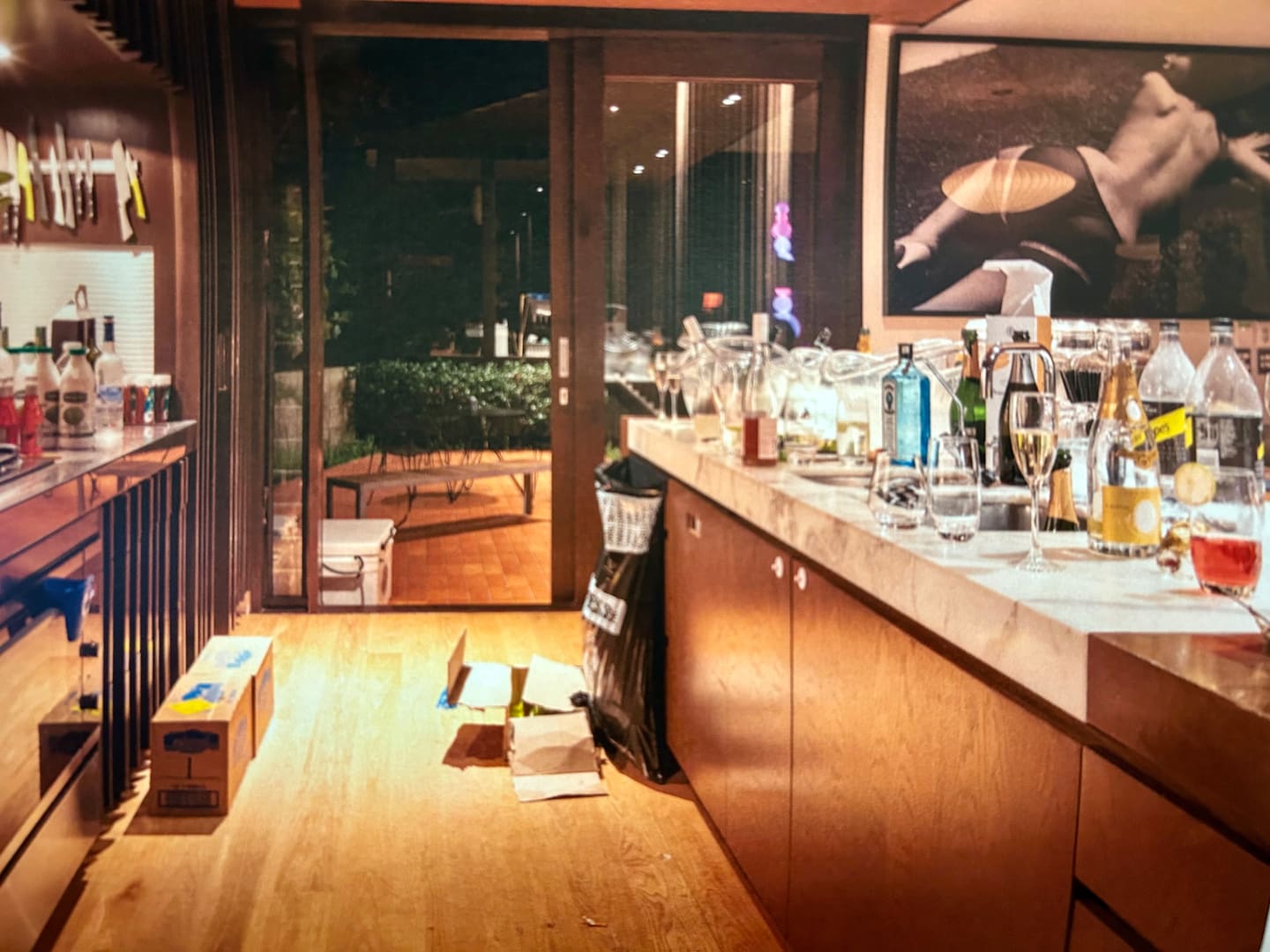
The cocktail party at a Westmere property that turned into a crime scene in April 2021. Photo / NZ Police
Whether 鈥渄isinhibited by the cocaine he鈥檚 just snorted鈥� or the alcohol, the man obviously wanted to confront Montgomerie at the party and air an old grievance, Mansfield said.
鈥淗e flinches and tries to look confident and tough, and this guy [Montgomerie] just ... instinctively reacts as if getting a fright,鈥� he said, describing catering glasses as cheap and easy to accidentally shatter. 鈥淧eople accidentally get cut at parties all the time.鈥�
鈥楤oiling point鈥�
Conversely, prosecutors Ruby van Boheemen and Isabella Joe spent the majority of their closing address painting Montgomerie鈥檚 version of events as too strange to be believed.
鈥淚t was no accident ...,鈥� van Boheemen said, adding: 鈥淭his was the end result of tension and hostility that had been building up for quite some time鈥� and finally reached a 鈥渂oiling point鈥� for Montgomerie at the party when he was insulted in front of his friends and peers.
鈥淢r Montgomerie wasn鈥檛 thinking rationally in that moment,鈥� she added. 鈥淗e was furious. This was a violent reaction in the heat of the moment.鈥�
He had a clear motive and the injury supports the complainant鈥檚 explanation of what happened, she said, arguing that the glass should have been nowhere near the man鈥檚 neck if Montgomerie had actually been intending to deflect a blow.
She noted that the only independent witness, a woman who has also requested name suppression, said she did not see the complainant make any threatening or sudden move prior to Montgomerie raising the glass to his neck.
Van Boheemen suggested that Montgomerie changed his explanation about what happened several times to suit the evidence as it became known to him.

Andrew Laurie Montgomerie leaves an Auckland District Court hearing in 2021. Photo / 九一星空无限
In a text to a friend, he initially suggested the other man punched him. Days later, in a written statement to police, he said the other man 鈥渢hrew a punch鈥� at his head as the defendant was walking away. That change was perhaps because he had no injuries to his face and realised he wouldn鈥檛 be believed, van Boheemen suggested.
Then, while giving evidence earlier this week, Montgomerie said there was no thrown punch but instead a tensing up and a hand movement of several hundred millimetres that caused the defensive action. That change, van Boheemen suggested, was because by that time he had listened to the testimony of the independent witness who said the complainant hadn鈥檛 moved until after he was injured.
Montgomerie dismissed his inaccurate text as simply trying to end a conversation with someone he didn鈥檛 want to talk to. The prior police statement, he insisted, wasn鈥檛 an inaccuracy so much as a broad summary that he intended to elaborate on later at trial.
The Crown didn鈥檛 buy it, nor did it consider credible Montgomerie鈥檚 explanation for having left the party almost immediately after the incident. He and his partner both said they didn鈥檛 realise the other man had been injured until seeing a TV news update later that night about a 鈥渃hampagne shanking鈥� in Westmere.
But he would have been bleeding from his own hand injury and CCTV showed a chaotic scene behind the couple as they stepped out of the house, van Boheemen said. Witnesses described the complainant calling out for help and his wife鈥檚 鈥渟hrieking wail鈥�, while another partygoer recounted following the couple down the street, yelling at them to stop.
For both to claim they had no idea of an injury at that point was 鈥渢otally implausible鈥�, van Boheemen said, arguing that the hasty exit instead 鈥渄emonstrates a consciousness of guilt鈥�.
鈥淗e knew he鈥檇 done something wrong and he wanted to get out of there before authorities arrived,鈥� she said.
Jurors were told the case had been delayed for so long in part because of a fall, which happened after the defendant was charged, in which he suffered a debilitating head injury.
If convicted at retrial, Montgomerie could face up to seven years鈥� imprisonment.
Craig Kapitan is an Auckland-based journalist covering courts and justice. He joined the Herald in 2021 and has reported on courts since 2002 in three newsrooms in the US and New Zealand.
Take your Radio, Podcasts and Music with you
Get the iHeart App
Get more of the radio, music and podcasts you love with the FREE iHeart app. Scan the QR code to download now.

Download from the app stores
Stream unlimited music, thousands of radio stations and podcasts all in one app. iHeart is easy to use and all FREE


